The number from a water change calculator matters most when it turns into a routine you can actually keep. Whether you are responding to high nitrates, setting a weekly maintenance schedule, or trying to figure out how much water to replace after a problem, the goal is the same: keep the tank stable without turning every maintenance session into a major reset.
What the percentage means in practice
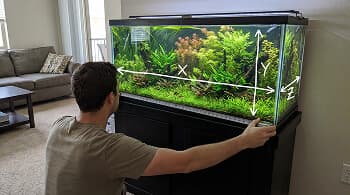
A percentage on its own does not keep a tank healthy. What matters is whether that percentage fits your real setup: bucket size, hose length, sink access, refill method, and the time you can give the tank every week. Percentages also scale off the water that is actually in the system, so it helps to know your net aquarium volume before you trust a “20% change” routine. A routine that is slightly less ambitious but actually happens on schedule is usually more effective than an ideal plan that gets skipped until the tank looks neglected.
- Translate the result into real gallons or liters, then into buckets, hose time, or fill marks you can repeat.
- If the recommended change feels too large to do regularly, the tank may be overstocked, overfed, or under-filtered for your goals.
- Keep the same routine long enough to judge the trend before changing it again.
Good reminder
Topping off fixes water level after evaporation. It does not remove nitrate, dissolved waste, or mineral buildup. Only actual water changes do that.
How often should you change aquarium water?
Frequency depends on the tank's waste load and how much stability you want. Lightly stocked planted tanks may get by with smaller weekly changes. Heavily stocked community tanks, messy fish, overfed tanks, and grow-out systems often need larger or more frequent changes. When in doubt, smaller consistent weekly changes are usually safer than occasional massive ones.
- Weekly is a strong default for most aquariums.
- Heavier stocking or heavier feeding usually means more water or more frequency, not wishful thinking.
- If nitrate climbs quickly between changes, the tank is asking for a stronger routine.
When to do extra water changes outside the normal schedule
Some situations justify water changes that have nothing to do with your usual weekly plan. Medication courses, overfeeding incidents, spawning or grow-out setups, filter crashes, cloudy-water events, and sudden ammonia or nitrite issues all change the normal rules. In those cases, the right move is often a more reactive schedule for a few days until the system is back under control.
- Ammonia or nitrite problems call for immediate corrective changes, not waiting for the regular maintenance day.
- After overfeeding or heavy die-off events, extra water changes can prevent a chemistry spiral.
- Grow-out tanks and fry systems usually need more frequent maintenance than display aquariums.
Match the replacement water before it enters the tank
The risky part of a water change is usually not removing old water. It is adding new water that is too cold, untreated, or too different in chemistry from the tank. Dechlorinator, temperature matching, and any salt or mineral adjustments should be part of the plan before you start refilling. The larger the change, the more important that preparation becomes.
- Large changes need closer temperature matching than small top-off-style maintenance.
- If you run remineralized, salted, or parameter-specific water, mix it fully before it hits livestock.
- Pouring untreated tap water directly into the tank is a bad shortcut, especially with sensitive species.
Use the result as feedback on the tank itself
If your calculator keeps pointing toward large, frequent water changes, that is not just maintenance advice. It is feedback about the system. The tank may be carrying too much bioload, getting too much food, lacking plant uptake, or relying on filtration that cannot keep up with how the aquarium is stocked. Sometimes the best long-term solution is not doing larger changes forever. It is reducing the amount of waste the tank produces in the first place, often by revisiting how many fish the tank can comfortably hold or how much food goes in each day.
- Vacuum the dirtiest areas first instead of trying to deep-clean the entire tank every time.
- Rinse mechanical media only as needed and avoid replacing biological media all at once.
- Keep a simple log of dates, nitrate readings, and change amounts so the routine gets easier to tune.
What water changes fix and what they do not
Water changes are powerful, but they are not magic. They dilute nitrate, dissolved waste, and many unwanted compounds, and they help reset the tank after problems. They do not solve overstocking by themselves, cure disease on their own, or permanently compensate for a filter that is too small. If the same problem keeps returning, water changes may be buying time while the real cause goes untouched.
Signs your routine is too weak or too aggressive
If algae, debris, or nitrate keeps creeping up fast, your routine may be too light. If fish look stressed after every maintenance session, substrate is constantly disrupted, or you are chasing pH and temperature swings, the routine may be too harsh or too inconsistent. The best schedule is one the tank tolerates well and your tests support over time.
What a good water change routine looks like
A good maintenance rhythm feels predictable. Nitrate stays in range, fish remain active, and water changes stop feeling like emergency interventions. Use the calculator to set your baseline, then adjust from real tank results until the schedule is easy enough to repeat and strong enough to keep the aquarium stable week after week.