Aquarium Salt & Salinity Calculator
What is the Aquarium Salt & Salinity Calculator?
This calculator tells you how much salt mix to add to reach your target salinity. Whether you’re filling a new reef tank or mixing water for a water change, you need the right amount of salt per gallon or liter.
We use standard reef salinity (35 ppt / 1.026 SG) as the reference. You can choose ppt (parts per thousand) or specific gravity. Always mix salt in a bucket until fully dissolved before adding to the tank.
How to Use This Calculator
- Enter your tank volume or dimensions (we’ll estimate volume).
- Set your target salinity in ppt or specific gravity, or pick a preset (Reef, Fish-only, Brackish).
- Read the result: grams (primary), plus kg/lbs and a very approximate cups estimate.
- Mix the salt in a separate container with water until fully dissolved, then add to the tank.
How would you like to enter your tank info?
Tank dimensions
What's your tank shape?
Enter Your Tank Dimensions
Target salinity
Need Help Measuring Your Tank?
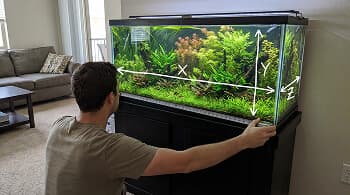
How to Measure Your Aquarium →
Not sure how to measure your tank dimensions? We have a complete visual guide with step by step instructions.
Click to see the full measuring guide
Recommended For Your Tank
Recommended gear for this setup
~45 gal tank
Aquarium test kits
Helpful for checking the rest of the system after mixing saltwater.
Water conditioners
Useful fallback utility gear from the current catalog.
As an Amazon Associate we earn from qualifying purchases.
What's Next?
Complete your aquarium setup with these helpful calculators:
What is the Aquarium Salt & Salinity Calculator?
This calculator tells you how much salt mix to add to reach your target salinity. Whether you’re filling a new reef tank or mixing water for a water change, you need the right amount of salt per gallon or liter.
We use standard reef salinity (35 ppt / 1.026 SG) as the reference. You can choose ppt (parts per thousand) or specific gravity. Always mix salt in a bucket until fully dissolved before adding to the tank.
How to Use This Calculator
- Enter your tank volume or dimensions (we’ll estimate volume).
- Set your target salinity in ppt or specific gravity, or pick a preset (Reef, Fish-only, Brackish).
- Read the result: grams (primary), plus kg/lbs and a very approximate cups estimate.
- Mix the salt in a separate container with water until fully dissolved, then add to the tank.
Marine salt mixing guide: stable salinity, water changes, and what the numbers mean
The gram result from this calculator matters when it turns into water you can actually add without shocking the tank. Marine systems punish sloppy salinity more than most freshwater parameters. A small drift over a week might be fine; a sudden jump during a water change is when fish stress, corals shrink, and you spend the evening diluting or re-mixing. The goal is the same as a good water change routine: predictable salinity, matched replacement water, and a process you repeat the same way every time. For how much water to swap each week, pair this tool with the water change calculator once you know your system volume.
Salinity is how much salt is dissolved in the water, usually expressed as parts per thousand (ppt) or specific gravity (SG). Natural seawater is often discussed around 35 ppt and roughly 1.026 SG at typical reef temperatures, though exact targets depend on your livestock, depth simulation, and what your tank has been running at successfully. Stability usually beats chasing a textbook number on the first day.
What the salt amount means in practice
The calculator gives you a starting mass of salt mix for a known volume of water at your target ppt or SG. Treat it as a first mix, not a single pour-and-forget step. Dissolve fully, let the water clear and temperature settle, then measure salinity and adjust. Slightly under-shooting the first dose is easier than over-shooting: raising salinity means adding a little more mix; lowering it means diluting with fresh RO/DI, which wastes salt and time.
- Weigh salt on a scale in grams for the initial dose; cups are rough and brand-dependent.
- Mix until completely clear; cloudy water usually means undissolved salt or precipitation issues.
- Match temperature to the display tank before adding large volumes of new water.
Good reminder
Evaporation removes water, not salt. Top-off with fresh RO/DI only. Adding salty water to replace evaporation drives salinity up and confuses people who think they are doing a water change when they are really concentrating the tank.
New water for a water change is a different job than filling an empty tank
For water changes, the volume you care about is the volume in the mixing container, not the display tank sticker. Measure the bucket or brute after fill marks settle, then calculate salt for that volume at the same salinity the display is running. That keeps changes neutral. For initial fill, rock and sand displace real water; if you dose for gross tank volume, salinity can land high. Use known water volume or measure in stages. If you are estimating display volume from dimensions, the volume calculator accounts for fill height and displacement better than the label on the box.
- Change water: mix to match display salinity; add after temp and parameters match.
- Initial fill: account for displacement or mix in a known reservoir and fill slowly while testing.
- Large changes need tighter matching than small top-offs of pre-mixed water.
Why you never dump dry salt into the display
Undissolved crystals can sit on sand, rock, and tissue, causing local burns and wild salinity pockets. Fish and corals can swim through a spike while the bulk water still reads fine on a meter. Always dissolve salt completely in clean water, aerate or circulate as needed, then add only finished water to the tank.
How to measure salinity you can trust
Refractometers are the common standard for reef tanks when calibrated correctly. Use calibration fluid near your operating salinity when possible, not only zero. Hydrometers are cheap but sensitive to bubbles and technique. Digital pens are convenient but still need periodic checks. Temperature affects how SG and refractive index read; know what your tool assumes. The reliable workflow is scale for mixing, meter for confirmation, log for trends.
- Calibrate on a schedule, especially after drops or when readings disagree with how the tank looks.
- Let mixed water rest; some mixes need time before salinity stabilizes for a final read.
- Cross-check after big mixes or when switching salt brands.
Brand, humidity, and displacement: what changes the real dose
Not every salt mix weighs the same per liter at the same SG. Fortified blends, different moisture content in an open bag, and old versus new formulations can shift how many grams you need. Rock and sand reduce display water volume, so tank labels overestimate how much water you are actually salting. When anything changes, new bucket size, new salt bucket, more rock, rerun the math instead of reusing last month’s scribbled note.
What salt mixing fixes and what it does not
Correct mixing keeps osmotic pressure stable and supports normal marine chemistry. It does not fix overstocking, poor nutrient control, or disease. If salinity keeps creeping up, the cause is usually evaporation and top-off habits, not mysterious salt. If it keeps crashing, look for excessive freshwater addition, skimmer behavior, or measurement error before blaming the mix alone.
When to mix outside your normal schedule
After equipment failures, large accidental freshwater adds, medication dilution, or moving a tank, you may need a corrective mix or series of smaller matched changes instead of one huge correction. Big salinity swings are harder on livestock than gradual adjustment. Sometimes splitting the fix across two sessions is safer than forcing the display back to target in one hour.
Signs your salinity routine is too loose or too aggressive
If SG or ppt wanders every week despite regular changes, your top-off, mixing, or measurement habit is probably inconsistent. If livestock look stressed right after every water change, new water may be off on salinity, temperature, or alkalinity trace balance, not just salinity alone. The best marine routine feels boring: top-off is fresh water only, change water is pre-mixed and matched, and the meter agrees with how the tank has been running for months.
What a good salt and water-change rhythm looks like
You keep extra mixed water or a repeatable mix recipe keyed to your containers. You log salinity occasionally, not only when something looks wrong. Water changes replace a known volume with water at the same salinity and temperature, and evaporation never gets corrected with new salt water. Use this calculator to lock the numbers, then let consistency do the rest of the work.